SLI (Service Level Indicator)

A quantitative measure of a specific aspect of service reliability, such as availability, latency, or error rate.

An SLI, or Service Level Indicator, is the actual metric used to measure whether a service is meeting its reliability objectives. Common SLIs include availability (percentage of successful requests), latency (response time at a given percentile), and error rate (percentage of failed requests).

SLIs are the foundation of the SLA/SLO/SLI framework. The SLI provides the measurement, the SLO sets the target, and the SLA is the external commitment. Without accurate SLI data, teams cannot meaningfully track or report on their reliability.

Good SLIs are chosen from the user's perspective. Rather than measuring CPU usage or disk space (which are internal metrics), effective SLIs measure what the user experiences: "Did the page load successfully?" and "How long did it take?" Hyperping's uptime and response time monitoring provides SLI data directly aligned with user experience.
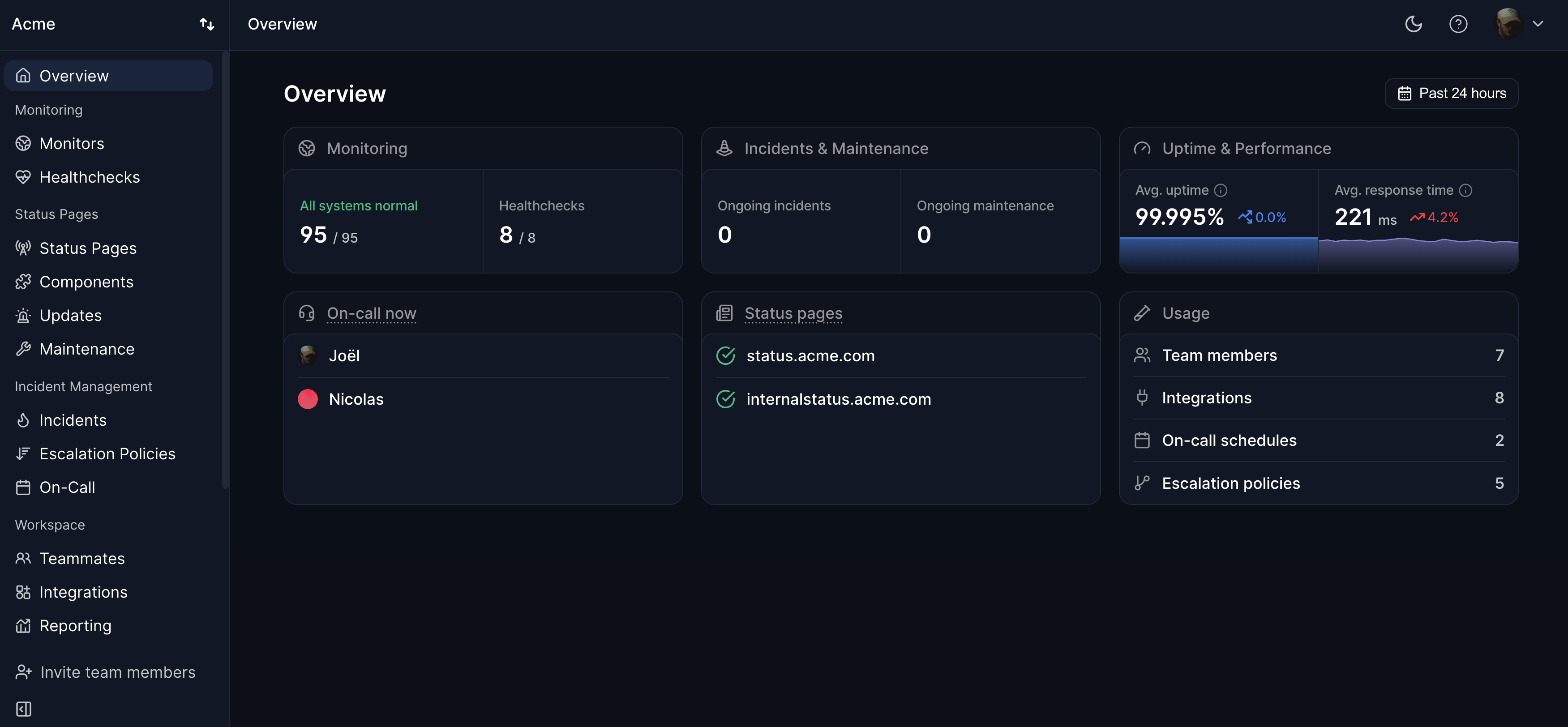
Hyperping monitoring dashboard

Related Terms

SLA (Service Level Agreement)
A formal contract defining the expected level of service, including uptime guarantees, between a pro...
SLO (Service Level Objective)
An internal target for service reliability, typically more ambitious than the external SLA.
Error Budget
The maximum amount of unreliability a service can have within a given period, derived from the SLO.
Latency
The time delay between a request being sent and the response being received, typically measured in m...
Availability
The proportion of time a system is functional and accessible, often expressed as a percentage.

Related Resources

Get started

Start monitoring in the next 5 minutes.

Stop letting customers discover your outages first. Set up monitoring, status pages, on-call, and alerts before your next coffee break.

14 days free trial — No card required