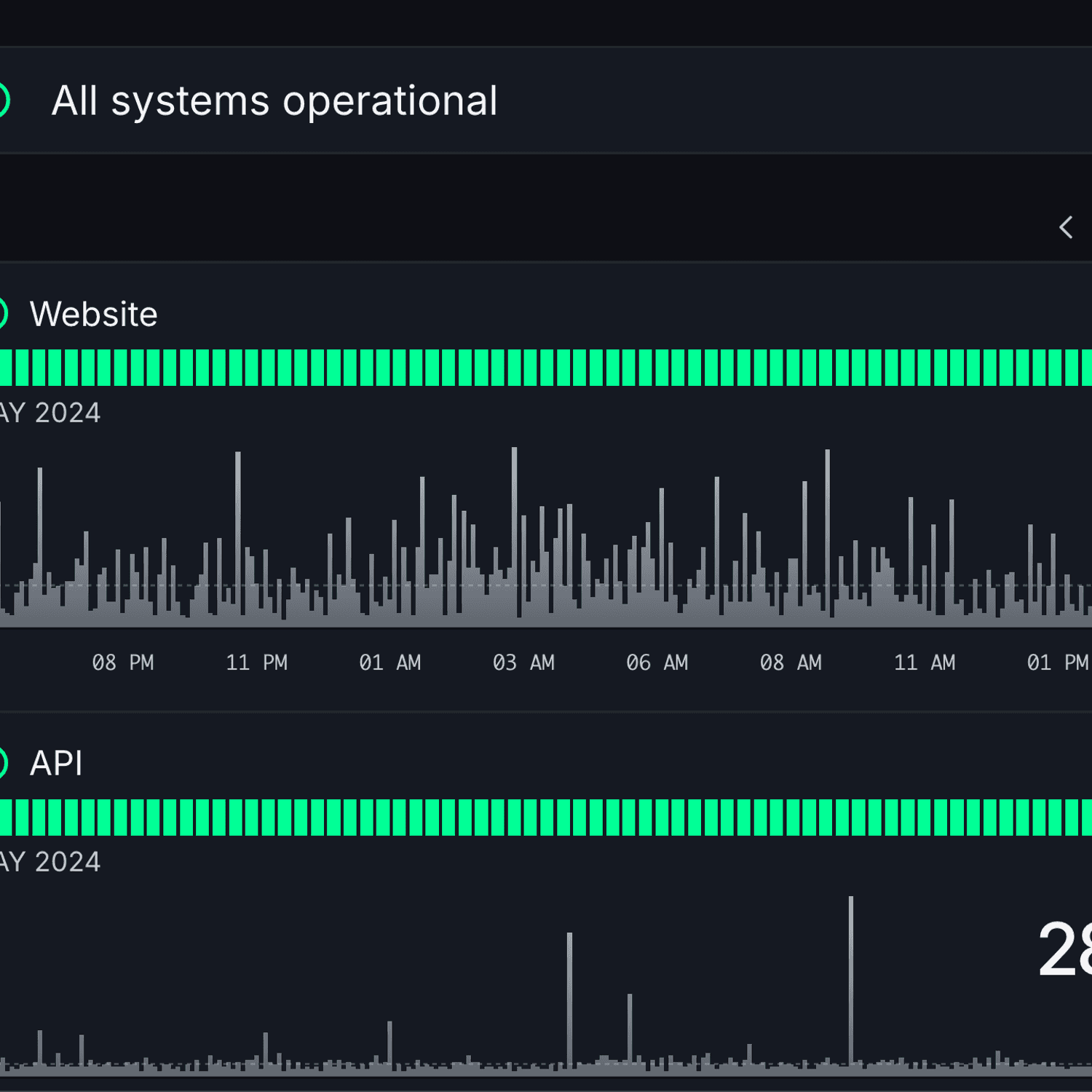
Today we're introducing groups for your status page sections, bringing a new level of organization to your service monitoring. You can now create logical groupings of related services within each section, making your status pages even more structured and easier to navigate.
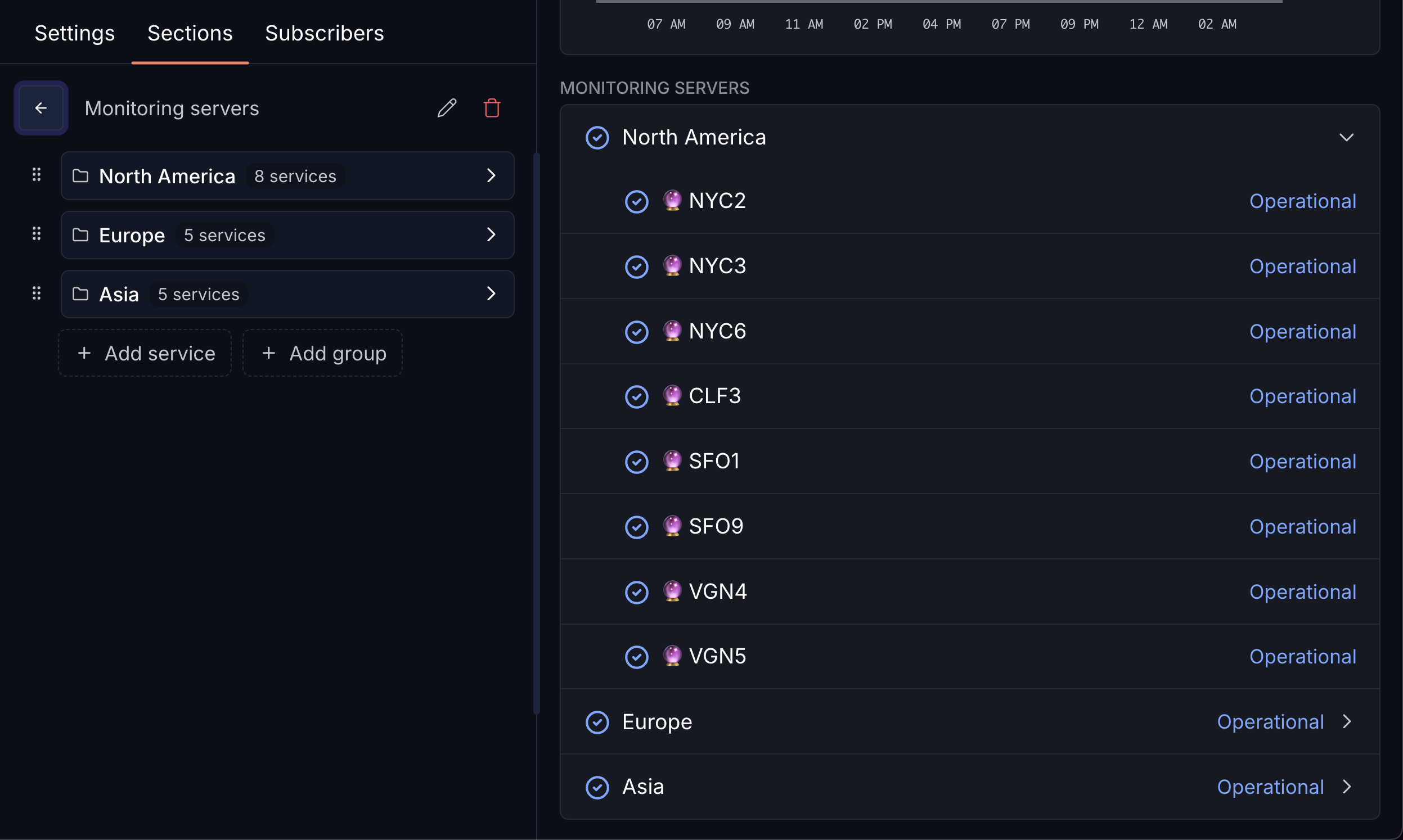
Why Groups Matter
While sections help organize your status page at a high level, groups provide that extra layer of organization when you need it:
- Bundle microservices: Group your auth service, user service, and payment service under "Core Platform"
- Regional deployments: Organize CDN endpoints or databases by region (US-East, EU-West, APAC)
- Team ownership: Group services by the teams responsible (Platform Team, Data Team, Frontend Team)
- Dependencies: Keep related services together (Redis Cache + Redis Queue + Redis Pub/Sub)
Check out our status page to see groups in action.
Article by
I'm Léo Baecker, the heart and soul behind Hyperping, steering our ship through the dynamic seas of the monitoring industry.

Related Articles
Best UptimeRobot Alternatives in 2026 [35 Analyzed, Top 5 Picks]
I analyzed 35 UptimeRobot alternatives and picked the top 5. Hyperping offers 30-second checks, on-call, and status page...
5 Best Pingdom Alternatives in 2026
Tired of Pingdom's pricing? We tested 39 alternatives and found 5 that offer faster checks, better alerts, and lower cos...
Why you need a status page (& what great ones include)
Status pages reduce support tickets by 24% during outages. Learn about automated updates, public vs private pages, and w...
Public vs private status pages [cost analysis, security, compliance, and more]
Public vs private status pages: which builds trust and cuts support tickets by 50%? Compare pros, cons, hybrid options, ...