RTO (Recovery Time Objective)

The maximum acceptable duration of time a service can be offline after a disaster or failure before causing unacceptable business impact.

RTO, or Recovery Time Objective, is the maximum amount of time that a service or system can be unavailable after a failure or disaster before the business impact becomes unacceptable. It answers the question: "How quickly do we need to get this back online?"

RTO is a key parameter in business continuity and disaster recovery planning. Different systems within an organization typically have different RTOs based on their criticality. A payment processing system might have an RTO of minutes, while a reporting dashboard might have an RTO of hours.

Achieving your RTO requires having the right infrastructure, processes, and monitoring in place. Fast detection (monitoring), quick notification (alerting and escalation), documented procedures (runbooks), and tested recovery mechanisms (backups, failover) all contribute to meeting RTO targets. Hyperping's monitoring detects outages within seconds, which is the first step toward meeting any RTO.

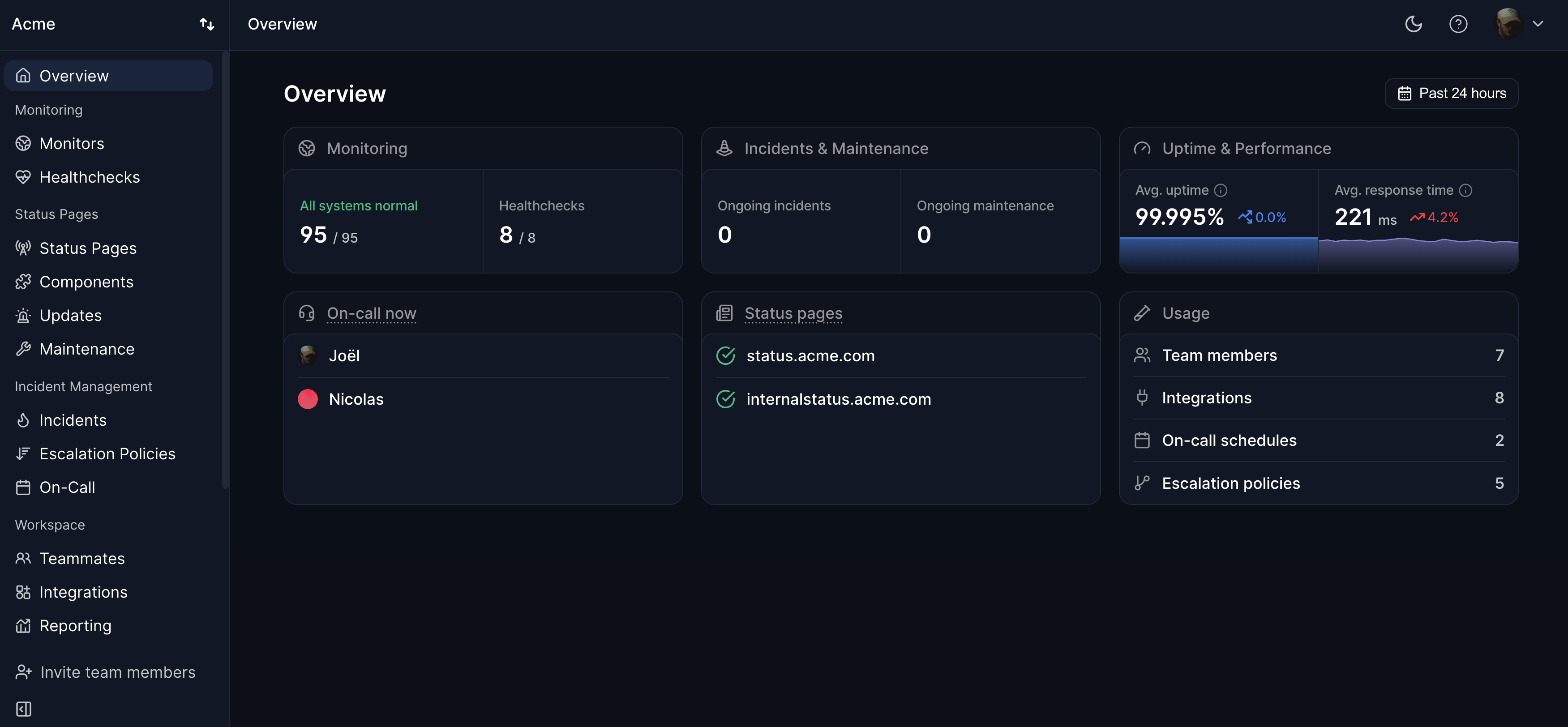
Hyperping monitoring dashboard

Related Terms

RPO (Recovery Point Objective)
The maximum acceptable amount of data loss measured in time — how far back in time your recovery poi...
MTTR (Mean Time to Recover)
The average time it takes to restore a system or service after a failure or incident.
Failover
The automatic switching to a backup system when the primary system fails, ensuring service continuit...
Availability
The proportion of time a system is functional and accessible, often expressed as a percentage.
Incident Management
The process of detecting, responding to, resolving, and learning from service disruptions.

Related Resources

Get started

Start monitoring in the next 5 minutes.

Stop letting customers discover your outages first. Set up monitoring, status pages, on-call, and alerts before your next coffee break.

14 days free trial — No card required