Chaos engineering is the discipline of experimenting on a production system to build confidence in its ability to withstand turbulent conditions. Popularized by Netflix's Chaos Monkey, it involves deliberately introducing failures — killing servers, injecting latency, severing network connections — to verify that the system degrades gracefully.
A chaos experiment follows a scientific method: define a steady state (normal behavior), form a hypothesis ("if we kill one database replica, the service should continue with no user impact"), introduce the failure, and observe whether the hypothesis holds. The goal is to uncover weaknesses before they cause real outages.
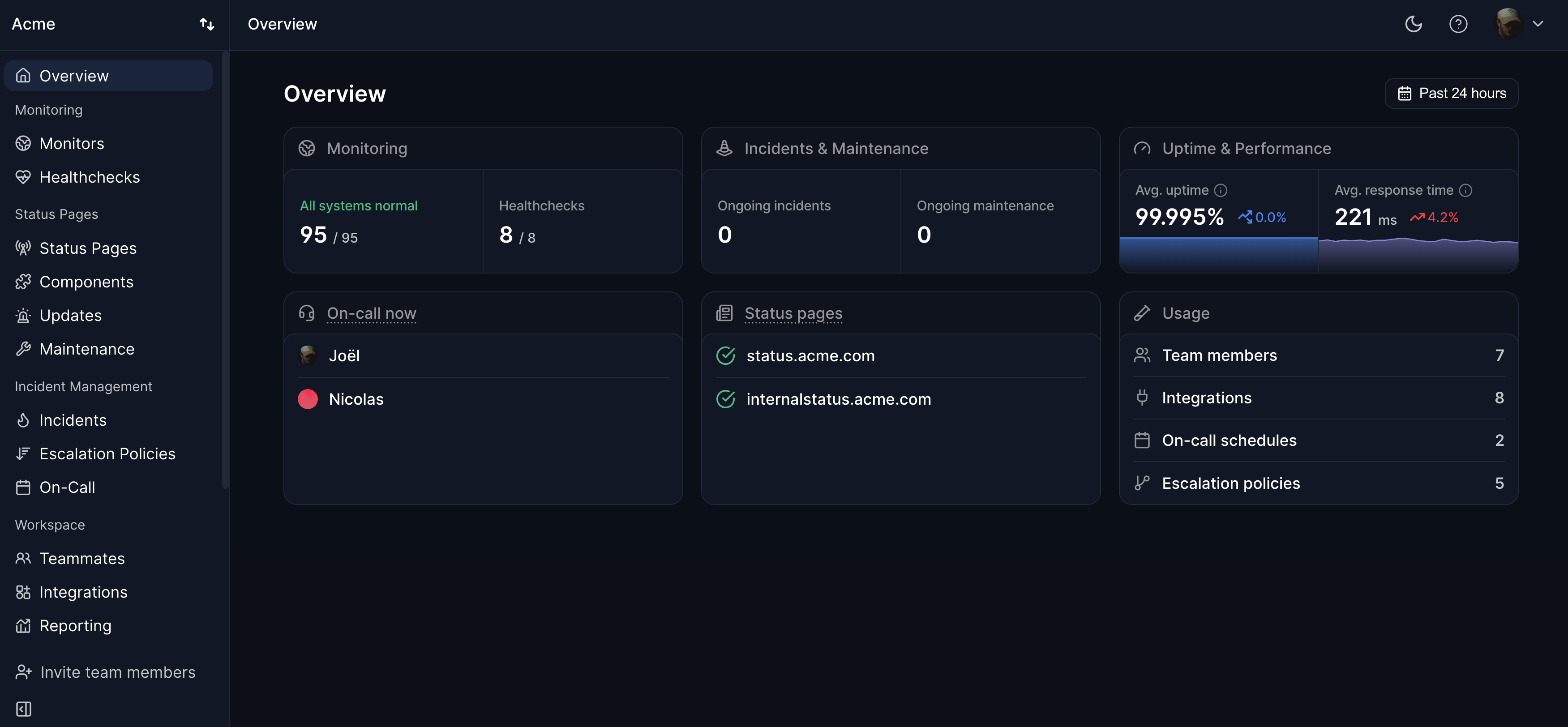
Chaos engineering is most effective when combined with comprehensive monitoring. You need to be able to observe the system's behavior during and after the experiment to determine whether it passed. Monitoring tools like Hyperping provide external validation — even if internal metrics look fine, external monitoring confirms that users are still experiencing a working service during the chaos experiment.