SRE (Site Reliability Engineering)

A discipline that applies software engineering practices to infrastructure and operations to build scalable and reliable systems.

Site Reliability Engineering (SRE) is a discipline originated at Google that applies software engineering principles to IT operations. SRE teams are responsible for the availability, latency, performance, efficiency, change management, monitoring, emergency response, and capacity planning of production services.

Key SRE concepts include SLOs and error budgets (defining and managing reliability targets), toil reduction (automating repetitive operational work), blameless postmortems (learning from failures without blame), and the 50% rule (SRE teams should spend at most 50% of time on operational work, with the rest on engineering projects that improve reliability).

SRE teams rely heavily on monitoring and alerting as the foundation of their practice. Comprehensive monitoring provides the SLI data needed to track SLO compliance, detect incidents quickly, and measure the impact of reliability improvements. Tools like Hyperping serve as a critical external monitoring layer that complements internal observability.

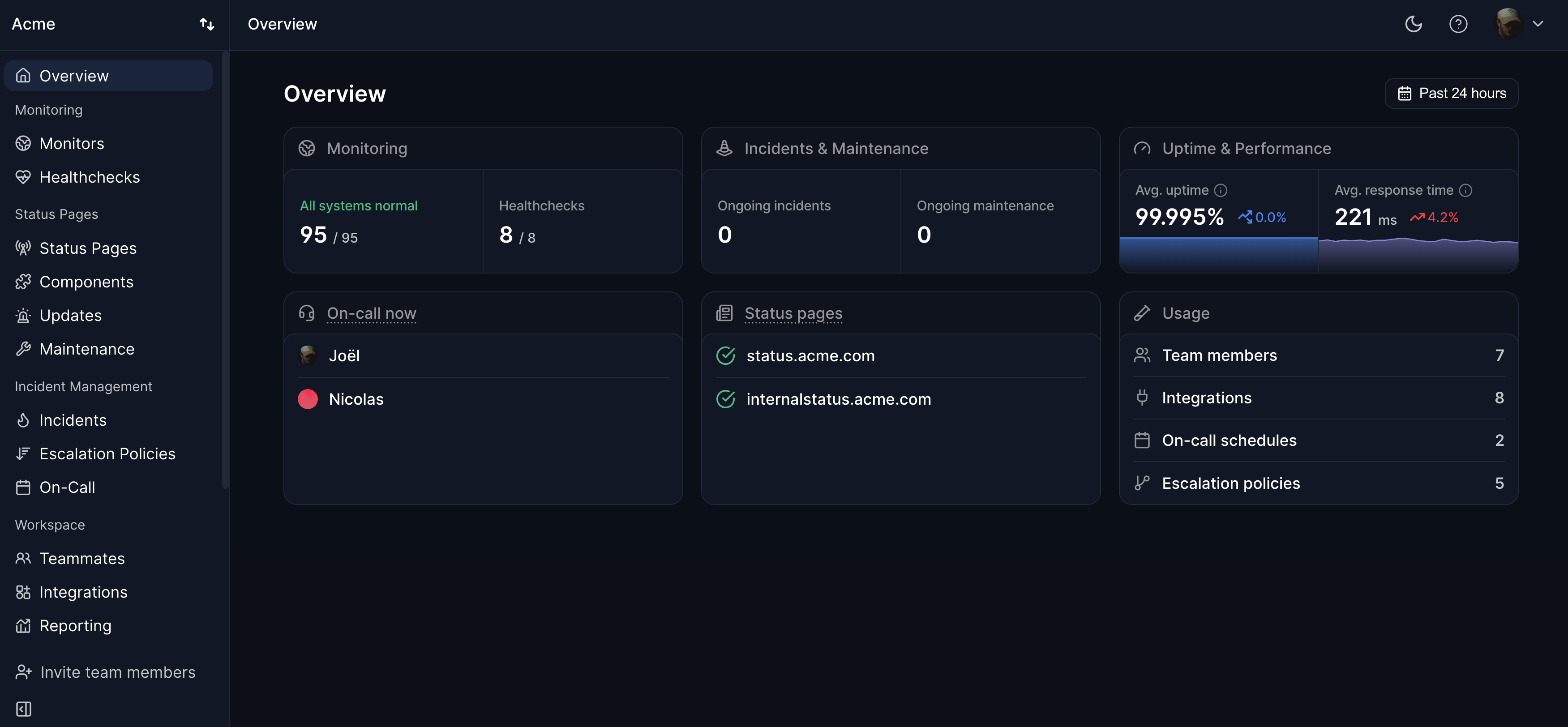
Hyperping monitoring dashboard

Related Terms

DevOps
A culture and set of practices that unify software development and IT operations to deliver software...
SLO (Service Level Objective)
An internal target for service reliability, typically more ambitious than the external SLA.
Error Budget
The maximum amount of unreliability a service can have within a given period, derived from the SLO.
Toil
Repetitive, manual operational work that scales linearly with service growth and can be automated.
DORA Metrics
Four key metrics identified by the DORA team for measuring software delivery performance: deployment...
Incident Management
The process of detecting, responding to, resolving, and learning from service disruptions.

Related Resources

Get started

Start monitoring in the next 5 minutes.

Stop letting customers discover your outages first. Set up monitoring, status pages, on-call, and alerts before your next coffee break.

14 days free trial — No card required